
Reverse Mortgages in Pennsylvania: Ambler & Montgomery County
Pennsylvania is where my Reverse Mortgage story started.
I’m Jason Eichmiller, founder of Reverse Mortgage Reality, and I’ve been helping senior homeowners and their families with reverse mortgages since 2008.
My mortgage career has deep roots in the Ambler area, including 1412 Ft Washington Avenue, and I continue to work with homeowners throughout Pennsylvania today.
Over the years, I’ve helped more than 470 seniors and their families navigate reverse mortgages. Some knew exactly what they wanted before they called me. Others weren’t even sure a reverse mortgage was a good idea.
That’s completely fine.
My job isn’t to convince everybody to get one. It’s to explain how these loans actually work, run the numbers, answer the uncomfortable questions and help you determine whether one makes sense for your retirement.
I work with homeowners throughout Ambler, Montgomery County, Bucks County, Philadelphia, the Main Line and surrounding Pennsylvania communities.
There Isn't Just One Kind of Reverse Mortgage Anymore
This is probably one of the biggest misconceptions I run into. People search for a “reverse mortgage” as though there’s one loan and every lender is offering essentially the same thing.
That’s simply not true.
Depending on your age, property value, current mortgage balance and what you’re trying to accomplish, we may look at several different options, including an FHA-insured HECM reverse mortgage, a proprietary or jumbo reverse mortgage, a reverse mortgage line of credit, or a HECM for Purchase.
And if you own a condo that isn’t FHA approved, don’t automatically assume a reverse mortgage is off the table. There may be other options available depending on the property and program.
That’s one reason I don’t believe in simply giving someone one reverse mortgage quote. The loan matters. The program matters. And the person helping you compare them matters.
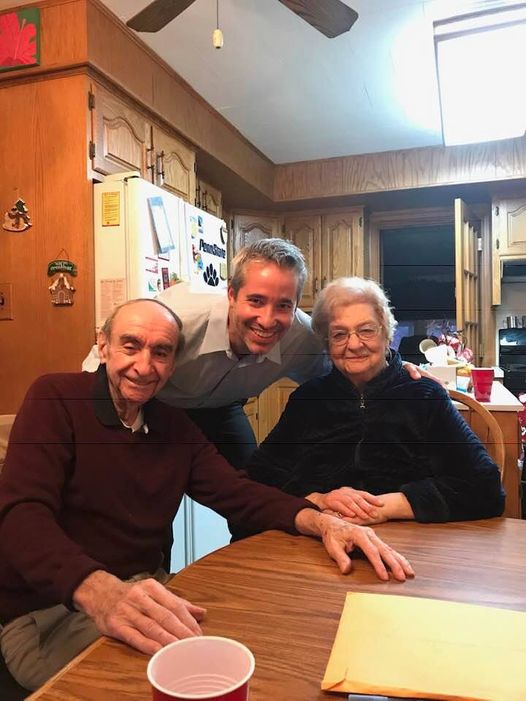
HECM Reverse Mortgages in Pennsylvania
The Home Equity Conversion Mortgage, better known as a HECM, is the FHA-insured reverse mortgage and still the program most people are referring to when they talk about reverse mortgages.
For the right Pennsylvania homeowner, a HECM can potentially eliminate an existing monthly mortgage payment*, provide access to home equity and create additional financial flexibility during retirement.
How Can You Receive the Money?
One of the nice things about an adjustable-rate HECM is that you don’t necessarily have to take all of your available proceeds at once.
Depending on your situation, you may be able to receive your available funds in several different ways:
Line of credit: Leave available funds in a reverse mortgage line of credit and access them when you need them. One of my favorite features of the HECM is that the unused portion of the available line of credit lasts forever AND grows over time.
Monthly payments: You may choose to receive scheduled monthly advances from the reverse mortgage for life or a set amount of time.
Lump sum: You may be able to access a portion of your available proceeds at closing, subject to the program’s initial-disbursement limitations. Generally, HECM’s allow borrowers to take roughly 60% of their funds up front with the remainder available after a year. This is NOT set in stone, however, but feel free to reach out and we’ll explain exactly what’s available in your situation.
A combination: You can potentially combine these options—for example, taking some money upfront while leaving the remainder available in a line of credit.
This flexibility is one reason I spend time figuring out what you’re actually trying to accomplish before recommending how the reverse mortgage should be structured.
What Happens to Your Existing Mortgage?
If you currently have a mortgage, the HECM generally must pay off that existing mortgage as part of the transaction.
For someone making a $1,500, $2,000 or $3,000 monthly mortgage payment, eliminating that required monthly principal and interest payment can dramatically change retirement cash flow.*
And despite what you may have heard:
You still own your home. You can still sell your home. And your children can still inherit your home.
The bank doesn’t “take the house.” Just like a “regular” mortgage, whatever’s owed will be paid back(generally through a sale or a refinance) and your kids will get the remainder of your equity.
I’ve been explaining those same misconceptions to homeowners and their adult children since 2008.
Proprietary or Jumbo Reverse Mortgages for Higher-Value Pennsylvania Homes
Pennsylvania has plenty of homeowners—especially in Montgomery County, Bucks County and the Main Line—whose home values can make a proprietary or jumbo reverse mortgage worth exploring.
Unlike a HECM, a jumbo reverse mortgage isn’t FHA-insured. These are private programs offered by different lenders, and the interest rates and available proceeds can vary from one program to another. No jumbo reverse mortgage charges FHA mortgage insurance, and every single jumbo or proprietary reverse mortgage is non-recourse.
I’ve worked with proprietary reverse mortgages for years, and this is an area where shopping multiple programs can make a very real difference. Depending on the homeowner’s age, property value and existing mortgage balance, a jumbo program may provide significantly more proceeds than a HECM(even at lower home values).
Now, this comes into play when you have a higher value home. See, the HECM has a maximum home value of $1,249,125. This means, if your home is worth $1,249,125 or $8,000,000 you’ll get the same size HECM. Quite simply put, the jumbo reverse mortgage doesn’t have a maximum home value. So if your home appraises at $8,000,000, we’ll lend off that 8 million dollar value. Of course this means a much higher loan amount for you.
They’re also worth looking at when the property itself creates challenges for traditional HECM financing, particularly with certain condominiums. Another example where the jumbo reverse mortgage shines is when you have high credit but low income. Some lenders allow us to waive the financial assessment if your credit score is over 720.
The key is comparing the options rather than assuming every “jumbo reverse mortgage” is basically the same loan. They aren’t. When investigating a jumbo reverse mortgage vs a HECM it’s important that you work with a broker who can show you a comparison between every single program out there.
Pennsylvania Condo Owners: Don't Give Up Because Someone Told You “It's Not FHA Approved.”
One of the most frustrating situations I run into is a homeowner who wants a reverse mortgage but has been told they can’t get one simply because they live in a condo that isn’t FHA approved.
I’ve worked with plenty of people who have already gone down that road. They tried to get an FHA-insured HECM, spent weeks dealing with the condo approval process, and eventually the loan went nowhere.
The problem is that getting a non-approved condominium through the FHA process can be difficult. The condo association may be asked to complete extensive documentation and provide financial, insurance and project information, and one issue with the project can potentially derail the approval. Pasted text
But FHA isn’t necessarily our only option.
There are proprietary reverse mortgage programs that aren’t insured by FHA and have their own condominium guidelines. And I’ve found that choosing the right proprietary lender can make an enormous difference when you’re dealing with a condo.
I Like to Find Out if the Condo Works BEFORE You Spend Money
This is one of the biggest differences in how I approach these loans.
With the proprietary program I use for many difficult condo situations, we can start by having the homeowners association complete a relatively simple one-page questionnaire with about 10 questions and provide a copy of the association’s master insurance policy.
I can then submit that information for review before we get deep into the reverse mortgage process.
Why does that matter?
Because I don’t want you paying for an appraisal or going through reverse mortgage counseling only to find out weeks later that the condominium itself isn’t eligible.
Let’s figure out whether we can approve the condo first.
Once we know the property works, then we can move forward with the rest of the reverse mortgage knowing we’ve already cleared one of the biggest potential hurdles. That’s designed to save you both time and money.
Already Been Turned Down? You May Have Chosen the Wrong Lender
This is something most seniors don’t realize: not every reverse mortgage lender has the same rules when it comes to condos.
I’ve worked with condo owners who were turned down by other reverse mortgage companies—sometimes more than once—before they found me. In some cases, they tried an FHA HECM. In others, they were even turned down for a proprietary reverse mortgage.
That doesn’t necessarily mean the condo can’t be approved.
As a broker, I work with multiple reverse mortgage lenders, and their condo guidelines can be very different. One lender may look at a project and say no, while another may have a much simpler approval process and be perfectly comfortable with it.
That’s why choosing the right lender can be just as important as choosing the right reverse mortgage.
If you’ve already been turned down because of your condo, let me take a look at why before you give up. If there’s a legitimate way to get it done, I’ll do my best to find it. And if there isn’t, I’ll tell you that too.
Want the full explanation? Watch my video on getting a reverse mortgage on a condo—even if you’ve been turned down before.
Helping Your Parents Explore a Reverse Mortgage
Some of the most important conversations I have about reverse mortgages don’t start with the homeowner at all.
They start with a son or daughter.
Maybe Mom and Dad are struggling with a mortgage payment. Maybe they’re burning through savings faster than anyone expected. Maybe the house needs work, they need help paying for care, or the family is simply starting to worry about how long their retirement money is going to last.
Adult children often have just as many questions about a reverse mortgage as their parents do—and sometimes a lot more skepticism.
I actually like that.
I’ve helped more than 470 seniors and their families since 2008, and I encourage adult children to be part of the conversation whenever the homeowner wants them involved.
We’ll talk about what happens to the house, how the loan balance grows, what happens when Mom or Dad eventually leaves the home, what options the heirs have, and what the reverse mortgage may mean for the family’s inheritance.
I’m not trying to sell the family on a reverse mortgage. I’m trying to make sure everybody understands it.
Sometimes the family decides it’s exactly what Mom or Dad needs. Sometimes we decide there’s a better option.
Either answer is okay with me.
Reverse Mortgages Aren't Free. And They're Not Right for Everybody
I love reverse mortgages. I’ve seen what they can do for people, and I’ve watched them completely change retirements.
But that doesn’t mean everybody should get one.
Reverse mortgages have closing costs. Interest accrues on the money you borrow. You’re using some of the equity you’ve built in your home, which means there may be less equity left for you—or your heirs—later.
Those are real considerations, and I don’t believe in glossing over them.
Before I recommend a reverse mortgage, I want to understand what you’re actually trying to accomplish. Are we eliminating a mortgage payment that’s putting pressure on your retirement? Creating a line of credit for the future? Paying for home improvements or care? Simply giving you more breathing room every month?
The benefit needs to justify the cost.
I’ve had conversations where I thought a reverse mortgage made tremendous sense. I’ve also told people I didn’t think they should do one.
My job isn’t to get you into a reverse mortgage. It’s to help you understand the numbers, the costs, the trade-offs and the alternatives so you can decide whether using some of your home equity actually improves your retirement.
Buying a Home in Pennsylvania with a Reverse Mortgage
A reverse mortgage isn’t just for someone who already owns their home. You can also use one to purchase a new home without taking on a required monthly principal and interest mortgage payment.*
This is commonly called a HECM for Purchase, and I think it’s one of the most underused reverse mortgage strategies out there.
Here’s the basic idea: instead of buying the new home entirely with cash—or putting money down and taking out a traditional mortgage—you bring a portion of the purchase price to closing and use a reverse mortgage for the rest.
You own the home just like you would with any other purchase. But instead of starting retirement in the new house with a traditional monthly mortgage payment, the reverse mortgage finances part of the purchase price without requiring monthly principal and interest payments as long as you continue to meet the loan requirements.
That can allow you to keep significantly more of your cash available for retirement rather than putting all of it into the house.
HECM Isn't the Only Purchase Option
This is where things get especially interesting.
Depending on your age, the value of the home you’re buying and the programs available, we may also compare the HECM for Purchase with a proprietary reverse mortgage for purchase.
By the way, in Pennsylvania, you can get a proprietary(or jumbo reverse mortgage) at age 55.
In many situations, a proprietary reverse mortgage can provide a slightly higher loan amount than the HECM, which means you may be able to purchase the same home while bringing less of your own cash to closing.
That’s a big deal for someone who wants to preserve retirement savings.
For example, if you’re selling your current home and buying another one, you may not want to take every dollar of equity from the sale and dump it into the next house. If the reverse mortgage can finance a larger portion of the purchase price, you can potentially keep more of that money invested, in savings, or simply available for retirement.
That’s why I don’t automatically assume a HECM for Purchase is the best option. I’ll compare the HECM and proprietary options and show you the numbers.
Why Would Someone Buy a Home This Way?
Maybe you’re downsizing. Maybe you’re moving closer to your children or grandchildren. Maybe you’re leaving a high-tax area, buying a condo, or simply moving into the house you actually want for retirement.
Whatever the reason, the question I like to ask is:
How much of your cash do you really want tied up in the new house?
If you’re buying a $600,000 home, you may have enough money to pay $600,000 in cash—but that doesn’t necessarily mean putting $600,000 into the house is the best retirement strategy.
A reverse mortgage for purchase can potentially let you buy the home you want while keeping a substantial portion of your cash available for everything else retirement throws at you.
Click Here to Learn More About Buying a Home With a Reverse Mortgage
*No monthly principal and interest mortgage payment is required as long as the borrower meets the loan requirements. Borrowers remain responsible for property taxes, homeowners insurance, applicable HOA charges, property maintenance and other loan obligations.
Considering a Reverse Mortgage in Pennsylvania? Let's Talk
If you’re considering a reverse mortgage—or you’re simply trying to figure out whether one makes sense—the first step doesn’t need to be complicated.
Give me a call and tell me what’s going on.
I’ll ask you a few basic questions about your age, your home, your current mortgage balance and what you’re hoping to accomplish. From there, I can explain which reverse mortgage options may be available and show you the actual numbers.
No pressure. No obligation. And no sales pitch.
I’ve been helping seniors and their families with reverse mortgages since 2008, and my roots in the mortgage business go back to the Ambler area. Today, I continue to work with homeowners throughout Ambler, Montgomery County, Bucks County, Philadelphia, the Main Line and across Pennsylvania.
Sometimes a reverse mortgage can completely change someone’s retirement. Sometimes there’s a better solution. My job is to help you figure out which one is true for you.
If you’d like to see what your options look like, let’s have a conversation.
 Copyright © 2019-2023 Key Home Lending, LLC; NMLS 2103187. 2345 Waburton Terrace, Wellington, FL 33414